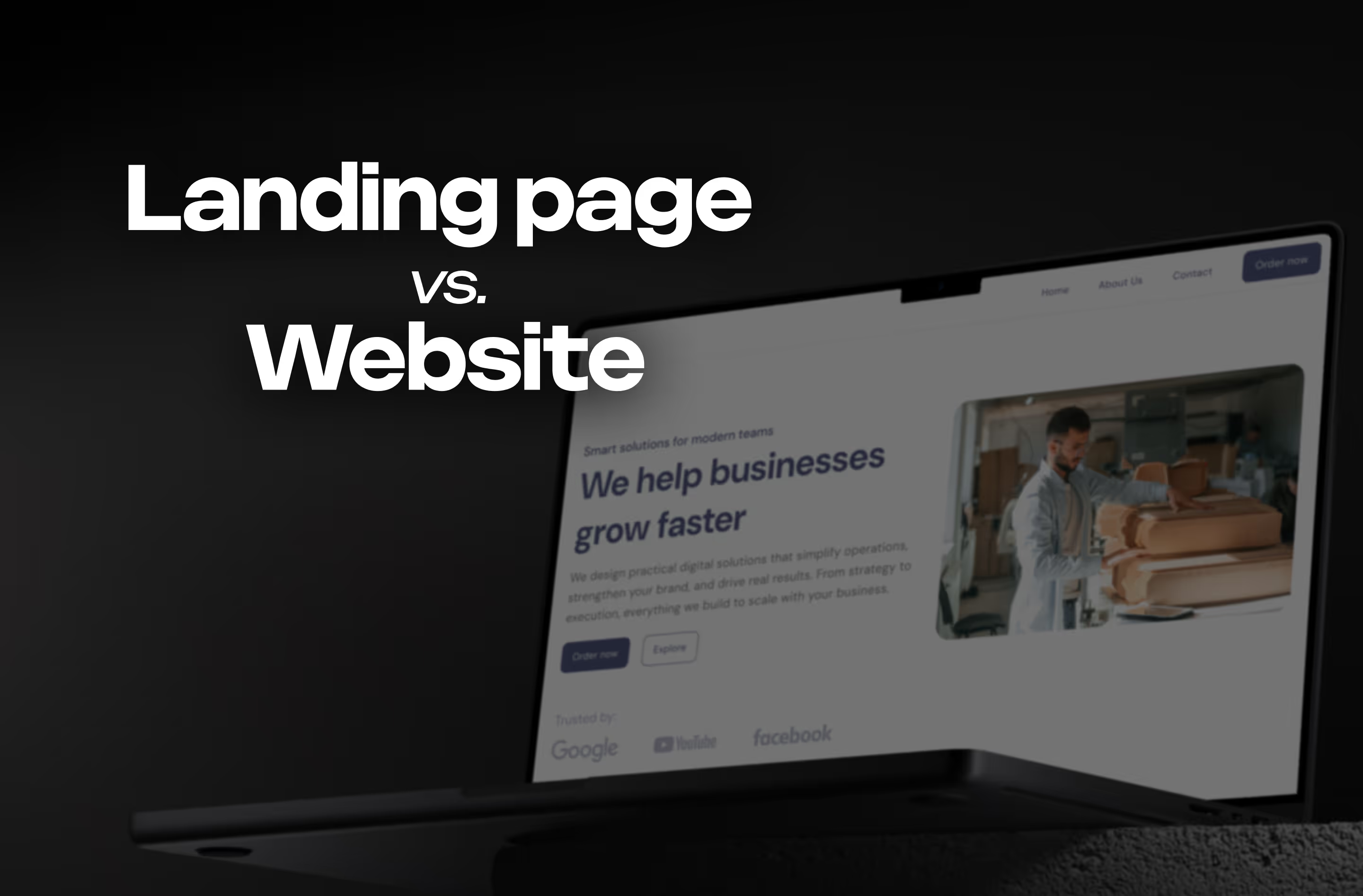
Why Your Choice Matters
Technically, both formats are websites. However, they differ in how the user journey is built and what action is expected from the user. Because of this difference, the results you get from each format are also different.
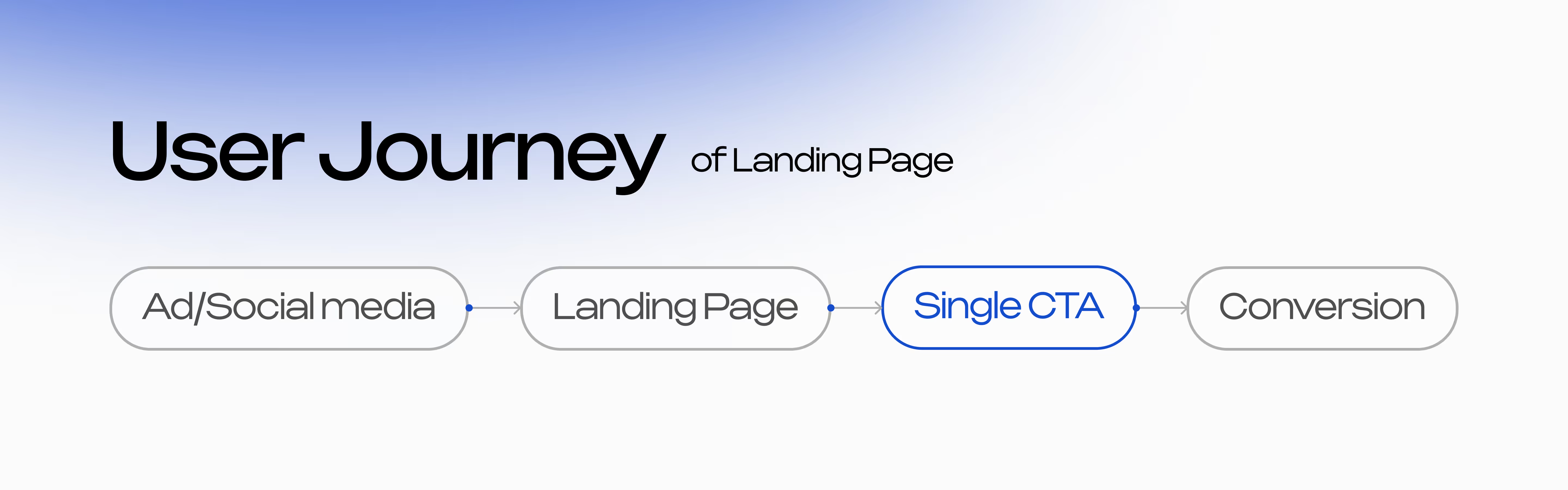
A landing page is designed to guide users through a single, focused path that leads directly to one specific action.
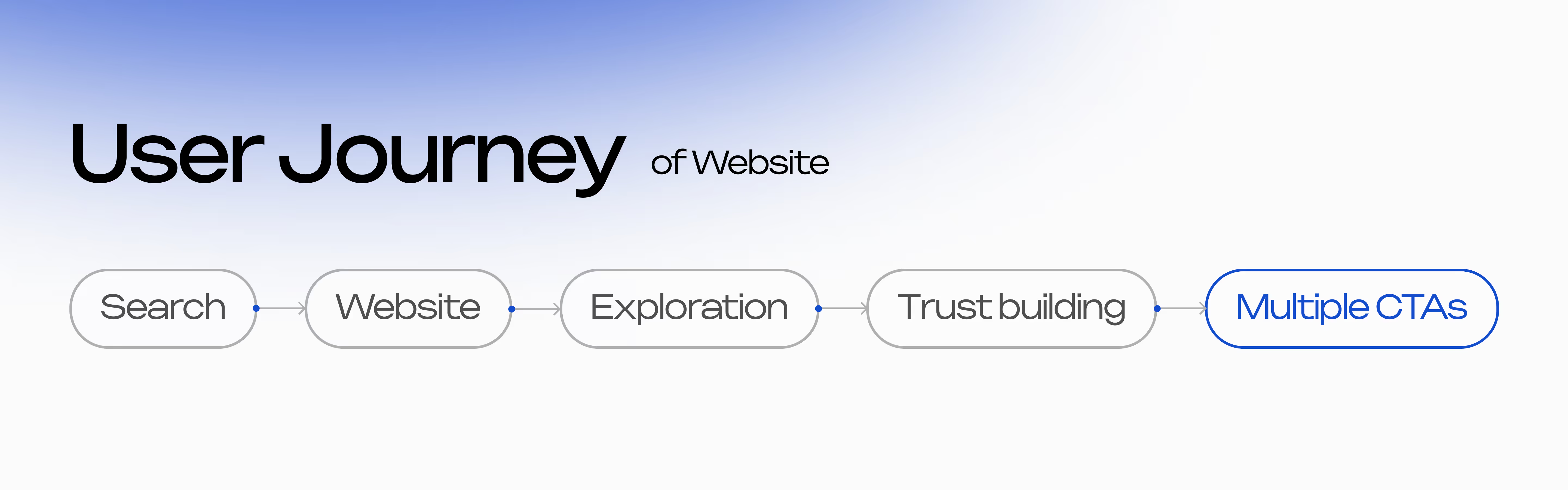
A website supports a broader user journey, where visitors explore business and choose from multiple possible actions.
Choosing the wrong format can cost businesses leads, money, and clarity.
That’s why the decision to build a landing page or a website (or to hire someone to do it for you) should always start with asking the right questions.
Key Differences Between Websites and Landing Pages
The main differences between them lie in the focus and structure.
- A landing page is a standalone page where all key information is presented in one place. It is designed to remove distractions and maximise conversion. So it has a clear problem-solution user journey.
- A website is a collection of interconnected pages. It contains all the relevant information that cannot be grouped into a single topic and serves multiple purposes: informing, educating, explaining, and building trust.
Key Selection Criteria
When to Use a Landing Page
Use a landing page when your goal is focus and conversion.
- Landing pages are temporary, campaign-specific assets. Ideal for free trials, product launches, webinars, events, or sales.
- You provide a single service or sell one main product.
- Most of your traffic comes from ads or social media.
- You target a niche or highly specific audience.
- You want to test demand for a new service or product.
- Your main goal is to increase conversion for one specific action.
- A landing page can also act as a business card, clearly explaining what you do and saving time on explanations.
Example:
A business coach launching a paid online workshop creates a landing page with the following structure:
- A clear hero section with a strong value proposition and one primary CTA
- A problem section highlighting the audience’s main pain points
- A solution section presenting the workshop offer
- Social proof through testimonials or client results
- Features and benefits of the workshop
- A final repetition of the primary “Register now” CTA
This structure it follows a natural decision-making flow:
attention → problem awareness → solution → trust → justification → action.
Suggested visual:
High-converting landing page wireframe with highlighted CTA
When to Use a Website
Use a website when your goal is credibility, depth, and long-term growth.
- A website acts as a permanent digital presence for your brand.
- You have several services or products that need separate pages.
- Best suited for SaaS, service-based businesses, e-commerce, and portfolios.
- You want to publish blog articles and build SEO around multiple keywords.
- You need to introduce the business and fully immerse users in your brand story.
- Lead nurturing through FAQs, resources, and contact pages is important for trust.
Example:
A creative agency with photo, video, and creative direction services uses:
- separate service pages,
- a portfolio section,
- a blog,
- and an About page to build authority.
Hybrid Strategy: Using Both
As your business grows, a landing page can become part of a larger website.
- The original landing page becomes the foundation of a multi-page website.
- Treat each product or offer page as a landing page focused on conversion.
- Start with a landing page, then add pages like Blog, About, or Resources as the business expands.
Mistakes to Avoid
Do not overcomplicate things. Focus on meaning and quality rather than creating many pages without structure or purpose. If you don’t have enough content, a landing page is often the more efficient choice.
Always think about the user journey and the action required from the user.
→For landing pages, simplify the journey and remove unnecessary navigation.
→For websites, keep the journey clear but enrich it with a thoughtful experience.
For both formats, page speed and mobile responsiveness are critical — poor performance will reduce conversions.
Ultimately, the choice between a landing page and a website depends on your business goals and traffic acquisition strategy. Track analytics, review results regularly, and adjust as your business evolves.